Serving Toronto & Across Ontario  ·  289-547-5911 · Toll Free 1-866-248-0567  ·  info@criticaltraumatherapy.com
Physiotherapy

Physiotherapy After an Accident

Treatment for whiplash, neck and back pain, headaches, reduced mobility and chronic pain, through to concussion, fractures, spinal cord injury and amputation, following a collision. Available at our Grimsby and St. Catharines clinics, and by home visit from Hamilton through to Niagara, including every town in between.

Our physiotherapists treat whiplash, back and neck pain, headaches, fractures, concussion, spinal cord injury and amputation, alongside chronic pain, reduced mobility, swelling and scarring. Treatment is hands-on and progressive, built around what you need to get back to doing, and measured so you can see the change rather than guess at it.

Injured in a motor vehicle accident? Start with a free intake call. We use it to understand what you need and to complete the funding request to your insurer. Your insurer has ten business days to respond, and treatment is booked once approval is in place. Case by case, we may begin sooner.

Measured
Movement and strength assessed with FDA-cleared devices
In-Home
Treatment where you are, if getting out is hard
No Cost
Approved accident benefits care is billed to your insurer
What We Treat

Conditions We Help With

Tap any condition to read how we approach it.

Whiplash & Neck Injury

The most common injury in a collision, and one that is frequently dismissed as minor. Whiplash can produce neck pain and stiffness, headaches, jaw pain, dizziness, and pain radiating into the shoulders and arms, sometimes appearing days after the crash.

Treatment restores movement gradually and safely, combining manual therapy, targeted exercise and education about what is happening in your neck. We measure your range of motion objectively, so improvement is documented rather than estimated.

Early treatment matters. Neck injuries left untreated are considerably more likely to become persistent.

Back, Shoulder & Hip Pain

Seatbelt forces, bracing on impact and the position you were sitting in all shape what gets injured. Back, shoulder and hip pain often arrive together, and each can limit the others.

We assess strength side to side, identify what is compensating for what, and build a programme that restores function in the right order. Progressing through those stages too quickly is one of the more common causes of setback and re-injury.

Chronic & Persistent Pain

Pain that has outlasted the healing of the original injury behaves differently and needs a different approach. Rest and avoidance, which help an acute injury, make persistent pain worse.

Treatment focuses on graded activity, pacing, and gently rebuilding confidence in movement, alongside pain education that explains why hurt does not always mean harm. Where psychological factors are keeping pain going, and they very often are, we can treat both alongside each other, with your physiotherapy and your therapy coordinated.

Headaches & Migraines

Headaches after a collision may come from the neck, from jaw tension, from concussion, or from disrupted sleep. Each has a different treatment.

We work out which mechanism applies to you rather than treating all headaches the same way, and coordinate with The Quantitative Sleep Assessment© where broken sleep appears to be driving them.

Concussion & Post-Concussion Recovery

Persistent symptoms after a concussion, including headache, dizziness, visual disturbance, poor balance, fatigue, difficulty concentrating, and difficulty tolerating screens, noise or busy environments.

Physiotherapy addresses the physical drivers of those symptoms, particularly the neck and the balance system, which are commonly involved and commonly overlooked. Treatment is graded carefully, because doing too much too soon prolongs concussion recovery, so activity is increased in measured steps and adjusted according to how you respond.

Where cognitive difficulties persist, we can bring in further support, including cognitive rehabilitation, neurofeedback and biofeedback training, and counselling for the mood and sleep problems that so often accompany a concussion.

Balance Problems & Fear of Falling

Dizziness, unsteadiness and the fear of falling reduce what people are willing to do, which weakens them further and increases the real risk of a fall.

We measure balance and fall risk objectively using validated testing, then treat with progressive balance and strength work. This is particularly important for older clients, where a single fall can change everything.

Fractures & Orthopaedic Injury

Once a fracture has healed or been surgically repaired, the joint is usually stiff and the surrounding muscle has weakened considerably. Physiotherapy restores movement, rebuilds strength, and returns you to weight bearing and normal use safely.

We work alongside your surgeon’s instructions and within any restrictions they have set.

Spinal Cord Injury

For incomplete and complete spinal cord injury we focus on maintaining and improving the function you have: strength, transfers, mobility, positioning, respiratory function and the prevention of secondary complications such as contracture and pressure injury.

Much of this work happens in the home, because that is where the practical barriers are. We also advise on equipment and on the modifications that make daily life manageable.

Amputation & Prosthetic Rehabilitation

Pre-prosthetic preparation including residual limb care, oedema control, positioning and conditioning, followed by gait retraining once a prosthesis is fitted.

We also address the fear of falling that commonly follows amputation, and coordinate with your prosthetist throughout.

Scar Management

Scar tissue from surgery, seatbelt injury or burns can restrict movement, remain painful and cause lasting distress about appearance. Treatment includes scar massage and desensitisation, silicone and pressure therapy, micropoint stimulation, and stretching to restore the movement the scar is limiting.

Early intervention produces considerably better results than treatment begun once a scar has matured.

Swelling & Lymphedema Management

Persistent swelling limits movement, causes discomfort and raises the risk of infection. We assess and manage oedema and lymphedema using manual lymphatic drainage, compression, exercise and skin care.

We can also prescribe compression garments through Ontario’s Assistive Devices Program, which covers a substantial share of the cost for eligible clients. Many people are entitled to this and are never told.

Return to Work & Daily Activity

Getting back to your job, your home tasks and the things you enjoy requires more than pain relief. It requires the specific physical capacity those activities demand.

We identify what your work and daily life actually ask of your body, measure where you currently stand, and build towards it. Where a full return is not realistic, we document that clearly and set out what modifications would make it possible.

How We Work

Measurement, Not Guesswork

Most physiotherapy progress is judged by observation and how you say you feel. We measure it.

Objective Assessment

FDA-cleared medical devices measure your range of motion, walking pattern, balance and muscle strength, comparing each side of your body and checking your results against normative data.

That establishes a precise starting point rather than an impression.

Progress You Can See

Re-measuring at intervals shows what has improved and what has not, so the plan changes when it needs to instead of continuing out of habit.

It also gives you evidence of progress on the days when it does not feel like there has been any.

Documented Properly

Where an insurer or lawyer is involved, measured findings carry considerably more weight than descriptive notes.

Our clinical documentation standard means your file reads consistently from your first appointment through to discharge.

What Treatment Involves

Our Physiotherapy Services

Your programme is built from whichever of these your assessment indicates, and adjusted as you progress.

Hands-On Treatment

  • Manual therapy and joint mobilisation
  • Soft tissue and myofascial release
  • Therapeutic taping
  • Acupuncture and dry needling
  • Shockwave therapy
  • Laser therapy
  • Compression therapy

Active Rehabilitation

  • Individually prescribed exercise programmes
  • Progressive strength and conditioning
  • Balance and fall prevention training
  • Graded return to activity and work
  • Pacing and activity management

Education & Self-Management

  • Understanding your injury and prognosis
  • Pain education for persistent pain
  • Posture and ergonomic advice
  • Home exercise programmes you can actually follow
  • Guidance on equipment and aids where needed

Physiotherapy is available in Grimsby and St. Catharines, and by home visit across Hamilton, Niagara and the surrounding areas.

What to Expect

Your First Appointment

About an hour, and considerably less daunting than most people expect.

The Conversation

How the collision happened, what hurts, what you cannot do now that you could before, and what you want to get back to.

That last question matters most. A programme aimed at getting you back to your job, your garden or lifting your grandchild works better than one aimed at a range-of-motion number.

The Examination

Your physiotherapist will look at how you move, test your strength and flexibility, and where relevant use FDA-cleared devices to measure your gait, balance and muscle strength against normative data.

Nothing is invasive. You will not be pushed through pain, and anything unsafe to test is simply not tested.

Treatment Starts Same Day

You will usually receive hands-on treatment at the first appointment, plus two or three exercises to start at home. It will not be a twelve-page programme you never open.

You will also get a plain explanation of what is injured and what recovery is likely to involve.

What to Wear

Loose clothing you can move in, and shorts or a vest if the injury is to your knee, hip, back or shoulder.

If you are being seen at home, we work with whatever space you have, and no equipment is needed.

Also Available

Beyond Injury Rehabilitation

Physiotherapy after a collision often involves more than the injured part.

Conditioning & Reconditioning

  • Rebuilding strength lost to months of inactivity
  • Cardiovascular reconditioning within your pain limits
  • Progressive loading for safe return to physical work
  • Managing fatigue and pacing activity
  • Preventing secondary injury from compensation patterns

Equipment & Home Adaptation

  • Advice on braces, supports and mobility aids
  • Compression garments prescribed through Ontario’s Assistive Devices Program
  • Assessment for equipment funding where needed
  • Practical adaptation of your home environment
  • Safe transfer and movement techniques
  • Guidance for family members assisting you

Restorative Movement & Yoga

Virtual one-to-one restorative, somatic, and trauma-informed yoga led by a Registered Social Worker, which sits well alongside physiotherapy where pain is persistent or the nervous system is on edge. Everything is adaptable to a chair or the floor, and family members can join if you would like them to. It is also offered in person at community locations in St. Catharines, so please contact us to hear about upcoming sessions.

Working With Your Other Care

  • Coordinated with your therapist and dietitian
  • Communication with your physician or surgeon
  • Pain management alongside psychological treatment
  • Objective re-measurement to document progress
  • Reports for your insurer, lawyer or case manager

Physiotherapy is available in Grimsby and St. Catharines, and by home visit across Hamilton, Stoney Creek, Ancaster, Dundas, Grimsby, Beamsville, Lincoln, St. Catharines, Niagara Falls, Welland, Thorold, Fort Erie and Port Colborne.

Common Questions

Questions About Physiotherapy

What people ask before booking.

Will it hurt?

Treatment should not be painful. Some techniques produce brief discomfort, and starting to move an injured area can ache afterwards, but pain during treatment is a signal to stop rather than push through.

Tell your physiotherapist immediately if something hurts. Working within your limits is not being cautious, it is how tissue actually heals.

How many appointments will I need?

It depends on the injury. Straightforward whiplash may settle in six to eight sessions; chronic pain or a serious injury takes considerably longer.

We re-measure at intervals so the plan changes when it needs to, rather than continuing out of habit. When you no longer need us, we will tell you.

Do I need a referral?

No. You do not need a doctor’s referral to see a physiotherapist in Ontario. You are welcome to contact us directly.

Should I rest or move?

For most injuries after a collision, controlled movement beats rest. Complete rest weakens muscle, stiffens joints and increases pain sensitivity.

The exception is the first few days after certain injuries, and anything your surgeon has restricted. That is exactly what an assessment establishes.

I have chronic pain, will exercise make it worse?

Persistent pain does not behave like an acute injury. Rest and avoidance, which help a fresh injury, make chronic pain worse over time.

We build up gradually from what you can currently manage, with pacing, and alongside psychological treatment where pain and mood are feeding each other. Hurt does not always mean harm, and understanding that is part of the treatment.

Can I have physiotherapy at home?

Yes, across Hamilton, Niagara and the surrounding areas. Being treated at home also shows us the stairs, the bath and the bed you are actually dealing with.

Physiotherapy home visits are only available in Hamilton, Niagara and the surrounding areas, and do not extend to Burlington, the rest of the Greater Toronto Area or other regions, though we have community partners there we are glad to recommend.

Funding & Access

How Your Care Is Funded

If you were injured in a motor vehicle accident, your treatment is funded through your auto insurer’s accident benefits, regardless of who caused the collision. We complete the paperwork, submit the funding request, and bill your insurer directly. Approved care costs you nothing out of pocket.

Your insurer has ten business days to respond to a funding request. Waiting is difficult when you are struggling, so on a case-by-case basis we may begin treatment before funding is confirmed.

No accident claim? Most extended health plans provide coverage. Where they do not, we offer sliding-scale and self-pay rates, protected accounts through BridgePoint, and MediCard financing for private-pay sessions. We will work within your budget.

No Referral Needed

You do not need a doctor’s referral to begin physiotherapy in Ontario. You are welcome to contact us directly.

Treatment at Home

If travel is painful or you cannot drive, we bring physiotherapy to you across Hamilton, Niagara and every town in between.

Alongside Your Other Care

If you are seeing us for more than one service, each discipline has its own treatment plan and its own funding approval, but where you would like it your clinicians can coordinate with one another rather than working in isolation.

Appointment Times

Typically 9 to 5:30, Monday to Friday, with evenings and weekends by appointment. Request a call and our intake team will phone you to book a time that works for you.

Beyond Trauma Care

Explore More Ways We Can Help

Two more parts of Critical Trauma Therapy worth a look.

CTT Wellness Division

Proactive mental wellness, stress management, and preventive care for people who want support before a crisis.

CTT Wellness →

TMS & Neurofeedback

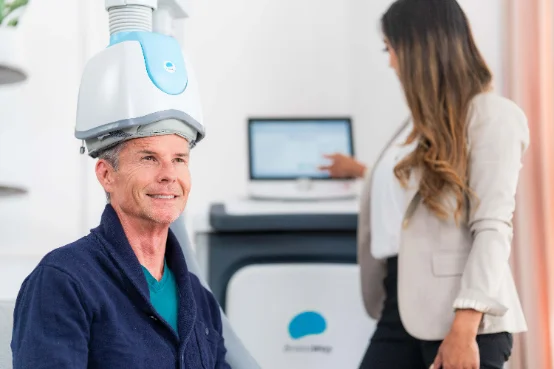
Transcranial Magnetic Stimulation, neurofeedback and biofeedback for depression and anxiety that has not responded to other treatment. Available at our Oakville clinic.

Learn More →

Ready When You Are

Weekday appointments 9 to 5:30, evenings and weekends by appointment — in clinic, at home, or online.

Book an Intake Call Submit a Referral