Questions About Therapy & Accident Benefits
The questions people ask us most often, answered plainly. If yours is not here, please call and ask.
Injured in a motor vehicle accident? Start with a free intake call. We use it to understand what you need and to complete the funding request to your insurer. Your insurer has ten business days to respond, and treatment is booked once approval is in place. Case by case, we may begin sooner.

Before Your First Appointment
What most people want to know before they pick up the phone.
Do I need a referral?
+
No. You are welcome to contact us directly, and most of our clients do. Referrals also reach us from lawyers, family doctors, nurse practitioners, specialists, case managers and insurers, but none of that is required for you to book.
What if English is not my first language?
+
We provide on-demand medical interpretation in over 300 languages, at no additional cost to you. An interpreter can be brought into an appointment immediately rather than the appointment being delayed while one is arranged. Interpretation is provided through Boostlingo, a medical interpreting platform that is independently audited for security (SOC 2 Type II, ISO 27001). Interpreters are bound by confidentiality, and sessions are not recorded.
Wherever possible we will also match you with a clinician who speaks your language directly, which many people prefer for therapy. Tell us when you call and we will arrange whichever suits you.
Do I need a lawyer to get treatment?
+
No. Accident benefits are available to anyone injured in a collision in Ontario, regardless of who was at fault and whether or not you have a legal claim. We can explain what you are entitled to and complete the paperwork for you.
Some people do choose to instruct a lawyer, particularly where injuries are serious or a claim has been denied. That is your decision entirely, and we treat clients with and without legal representation.
I have a lawyer. Can they refer me to you?
+
Yes, and many of our clients arrive that way. Ask your lawyer or their law clerk to send us a referral, or simply give them our details. We work with personal injury firms across Ontario and are used to coordinating alongside a legal file.
If you would prefer, we can contact your lawyer directly on your behalf. Tell us who they are and we will make the introduction, request the documents we need, and keep them informed as your treatment proceeds.
Where your lawyer is involved in your file, they will ordinarily receive our assessment reports and progress updates as part of the claim. The detailed content of your sessions is a separate matter, and we will explain clearly what is shared and why before anything is released.
I am already in therapy elsewhere. Can I switch to you?
+
Yes. You are entitled to choose who provides your care, and you do not need anyone’s permission to change. This is your treatment and your decision.
People move to us for all sorts of reasons: a long wait between appointments, a clinician who is not the right fit, or wanting therapy with physiotherapy or nutrition alongside it. Others come because they need an assessment their current provider cannot offer, or simply want somewhere that specialises in recovery after a collision. Any of those is a good enough reason, and you are not obliged to explain yourself.
Practically, it is straightforward. Call us and tell us where you are up to. If you are funded through an accident benefits claim, we prepare a new treatment plan (an OCF-18) and submit it to your insurer. Switching providers does not restart your entitlement or count against you. With your written consent we can request your records, so you are not starting from the beginning. You are welcome to begin fresh, though, if you would rather.
We will not ask you to criticise your previous clinician, and we would not want you to feel awkward about leaving. If it turns out that staying where you are is genuinely the better option for you, we will say so.
Can I come for just one service?
+
Yes. Come to us for the one service you want, and nothing more. If you would like counselling but already have a physiotherapist you trust, keep them. If you want physiotherapy and would rather not discuss your mental health, that is entirely your choice.
We mention the other services because many people do not realise they are available or funded, not because they are a package. You will not be pushed towards anything you have not asked for.
We are also glad to work alongside providers you are already seeing, whether that is your family doctor, an occupational therapist, a chiropractor, a massage therapist, or a clinic elsewhere. With your written consent we will share what is useful and coordinate with them. Without it, we will not.
If at some point you do want to add something, you can. And if we think another service would genuinely help, we will explain why and leave the decision with you.
How much will it cost me?
+
If you were injured in a motor vehicle accident, your treatment is funded through your auto insurer’s accident benefits. Approved care costs you nothing out of pocket. We submit the funding request and bill the insurer directly.
We also offer third-party financing through MediCard, so treatment can begin now and be paid for over time. Without an accident claim, most extended health plans provide coverage for psychotherapy, psychology, physiotherapy, and dietitian services, though the amount varies. Where there is no coverage we offer sliding-scale and self-pay rates, protected accounts, and financing through providers such as BridgePoint. We will work within your budget. See how insurance and funding work.
Does car insurance cover therapy after a car accident in Ontario?
+
Yes. Every auto insurance policy in Ontario includes Statutory Accident Benefits, and those benefits cover psychotherapy, counselling, and psychological assessment, not only physiotherapy and physical treatment. Most people have no idea this coverage exists, and assume therapy would be an expense they cannot afford.
It is separate from OHIP, which does not cover psychotherapy at all. We prepare the treatment plan, submit it to your insurer, and bill them directly, so approved treatment costs you nothing out of pocket.
Am I covered if I was a passenger, a pedestrian, or on a bicycle?
+
Yes. Accident benefits are available to anyone injured in a motor vehicle accident in Ontario, whether you were driving, a passenger, a pedestrian, or a cyclist. You do not need to have been in a car at all.
If you do not hold your own auto policy, there is still a route to coverage. It is often through a household policy or the insurer of a vehicle involved. Call us and we will help you work out where to apply.
One caveat since the July 2026 reforms. Medical, rehabilitation, and attendant care benefits remain available to anyone injured, but the optional benefits now generally extend only to people named on a policy. A pedestrian, cyclist, or passenger without access to their own auto insurance may therefore be limited to the mandatory benefits. Treatment funding is the part that remains protected, which is what matters most for getting care started.
What if the accident was my fault?
+
It makes no difference to your treatment. Ontario operates a no-fault system for accident benefits. That means the funding for your care comes from your own insurer, regardless of who caused the collision.
You do not have to wait for fault to be determined before starting treatment, and you will not be refused care because of it. Guilt about the accident is itself something people bring to therapy, and it is a legitimate thing to work on.
How much coverage do I have for treatment?
+
It depends on how your injuries are classified. Injuries treated under the Minor Injury Guideline (MIG), typically sprains, strains, and uncomplicated whiplash, currently carry a limit of $3,500 for medical and rehabilitation care.
Where injuries fall outside that guideline, the current limit is $65,000 combined for medical and rehabilitation care. That limit rises to $1,000,000 where an impairment is determined to be catastrophic. A documented psychological injury is one of the recognised routes out of the Minor Injury Guideline, which is why proper assessment early matters so much. An assessment by a Registered Social Worker or psychotherapist is often what establishes it. Where a formal diagnosis is needed, that can come from a psychologist, physician or nurse practitioner.
These are the current limits and your own entitlement depends on your policy and circumstances. We will review this with you, and confirm it with your insurer, before treatment begins.
How do I know if I need therapy after a car accident?
+
Some common signs: reliving the collision in intrusive thoughts, flashbacks, or nightmares; anxiety or panic when driving or travelling as a passenger; avoiding the road, the route, or vehicles altogether; or sleeping badly or waking unrefreshed. Other signs include irritability and anger that feels unlike you, difficulty concentrating, feeling numb or detached, withdrawing from people, or pain that is not improving as expected.
You do not need to have a diagnosis, and you do not need to be at breaking point. If daily life has changed since the accident and has not gone back, that is reason enough to have a conversation.
These reactions are common and treatable. They are not a sign of weakness, and they tend to respond better to treatment the earlier it starts.
Can I get help if trauma is stopping me from working?
+
Possibly, and this is an area where the rules recently changed, so it is worth checking your own policy. Accident benefits include income replacement for people unable to work because of accident-related injury. They also include non-earner benefits for those who were not employed but can no longer live a normal life. Psychological injury counts towards both.
Important change as of 1 July 2026. Under Ontario’s reformed auto insurance rules, only medical, rehabilitation, and attendant care benefits remain mandatory in every policy. Income replacement, non-earner, caregiver, and housekeeping benefits are now optional coverages that have to be purchased. Existing policies keep their current coverage on renewal unless the policyholder actively opts out. So many people are still covered, but newer policies may not be.
If you are unsure what you hold, ask your insurer or broker for a copy of your policy declarations page. If income replacement is not part of your coverage, there may be other routes, including long-term disability through your employer, WSIB where the accident was work-related, or Ontario Works, ODSP, and CPP Disability. We complete the supporting clinical documentation for all of those.
These benefits depend on documented clinical evidence, which is where our assessments matter. We document how your symptoms affect your capacity to work, in the terms the relevant test requires. We also complete the supporting paperwork for Ontario Works, ODSP, and CPP Disability where those apply.
Is therapy covered by OHIP?
+
No. Psychotherapy, psychology, and social work are not covered by OHIP in Ontario, which surprises many people. That does not mean you have to pay privately.
Most of our clients are funded another way: through auto insurance accident benefits after a collision, through extended health benefits at work, through WSIB, or through an employer’s assistance programme. Where none of those apply, we offer sliding-scale rates and third-party financing through MediCard.
Call us and we will work out which route applies to you before you commit to anything.
What if my treatment plan is denied?
+
It happens, and it is often because the documentation did not set out clearly enough what you are experiencing and why the treatment is needed.
We prepare the assessment findings and clinical reasoning needed to support a reconsideration, and we have had funding reinstated on that basis. We will also tell you honestly if we do not think a request is likely to succeed, rather than raise your hopes.
In the meantime, your treatment does not have to stop. If you have extended health benefits through work, we can bill those instead. Where you have a lawyer and your claim is still open, we can also arrange for our fees to be settled later out of the claim. That way, you continue receiving care now without paying for it yourself. Many of our clients are funded this way and it is a routine arrangement.
A denial is a position, not a final decision. You generally have two years from the date of it to dispute the matter at the Licence Appeal Tribunal. If you already have a lawyer, we notify them as soon as the denial arrives, so they are not finding out later. We also work alongside them to challenge it.
My accident was years ago. Is it too late?
+
Not for treatment. People come to us months or years after a collision. Often that is because they assumed the symptoms would fade, or because life only recently made space to deal with them. Trauma does not expire, and neither does our willingness to help.
Funding depends on where your claim stands. If you never made a claim, there are time limits in Ontario’s auto insurance system for applying. Speak to your insurer or a lawyer promptly. If your claim is still open, funding may well still be available and we can submit the request.
If your claim has already settled, accident benefits funding has ended, and treatment is arranged privately instead. That is very common and entirely manageable: extended health benefits through your own or a partner’s employer, sliding-scale rates, third-party financing, and in some cases money set aside within the settlement itself for future care. Our post-settlement care page sets out the options in full.
How long until I can be seen?
+
Usually within a week of getting in touch, at any of our four clinics or virtually.
For accident claims there is one qualification worth understanding: your insurer has ten business days to respond to a funding request. That timeline is outside our control. Because we would rather not leave you waiting while you are struggling, on a case-by-case basis we may begin treatment before funding is confirmed.
What happens at the first appointment?
+
A conversation. Your clinician will ask about your health history, the accident, and how your day-to-day life has changed since. There is nothing to prepare and nothing you need to have worked out in advance.
You set the pace. You can take breaks, you can decline to answer anything, and you are welcome to bring a family member or support person. By the end you will know what we recommend and why. In the meantime, our client resources page has coping tools, sleep and driving tips.
Can someone come to my home?
+
Yes. We provide in-home and in-community therapy across the Greater Toronto Area, Hamilton, Niagara, Kitchener–Waterloo, Gravenhurst and surrounding areas.
Physiotherapy home visits are available across Hamilton, Stoney Creek, Ancaster, Dundas, Grimsby, Beamsville, Lincoln, St. Catharines, Niagara Falls, Welland, Thorold, Fort Erie and Port Colborne.
What if I cannot drive?
+
Tell us when you call. We can arrange transportation, come to your home, or see you virtually.
Fear of driving after a collision is extremely common, and is itself something we assess and treat. It is worth mentioning rather than working around.
Do you see children?
+
Yes. We see children from age four at our Grimsby and St. Catharines clinics, and from age ten in Kitchener. Dietitian services are available from age six.
Therapy is adapted to age, using play and structured activity with younger children and more direct conversation with teenagers.
Is what I say confidential?
+
Yes. Your clinical records are confidential and governed by Ontario privacy legislation and our regulatory colleges.
Where your treatment is funded by an insurer, they receive the treatment plans and progress reports needed to administer your claim. They do not receive the content of your sessions. We will explain exactly what is shared before you begin.
The limits to confidentiality are the legal ones that apply to every regulated health professional, including a risk of serious harm to yourself or someone else, and suspected harm to a child. We will always tell you if such a situation arises.
Can I claim benefits and sue at the same time?
+
Yes. They are two separate paths. Accident benefits come from your own insurer regardless of who caused the collision, and they fund your treatment and income support. A claim against the at-fault driver is a separate action for pain and suffering and for losses the benefits do not cover.
One does not prevent the other, and most seriously injured people pursue both. There are time limits on starting that second claim, so it is worth speaking to a lawyer rather than leaving it. We are glad to work alongside them.
What if I have already missed a deadline?
+
Do not assume it is over. The rules allow relief where there is a reasonable explanation for missing a time limit. It is decided case by case, though, rather than granted automatically.
Also worth knowing: the thirty days to return your application generally runs from when you receive the forms, not from the day of the accident. People often panic unnecessarily about this.
If you think you have missed something, speak to a lawyer promptly, and call us as well. We will help you work out where you stand.
Will claiming put my insurance premium up?
+
Accident benefits are a no-fault coverage you have already paid for, and using them is not the same as being found at fault. Whether a premium changes depends on the fault determination and your insurer’s own rules, not on whether you sought treatment.
We mention this because fear of a premium increase is one of the most common reasons people delay claiming. Delay causes considerably more harm than the premium ever would. If it worries you, ask your broker before deciding.
About Critical Trauma Therapy
How we work, and what makes a clinic different from an individual practitioner.
Why choose a clinic over a sole practitioner?
+
Independent therapists include many excellent clinicians, and for straightforward counselling a sole practitioner may be exactly right. After a motor vehicle accident, the difference matters more.
There is accountability. Our clinicians work within an organisation with clinical oversight, internal review of reports before they are released, and a documentation standard every clinician follows. If a concern arises about your care, there is a structure to raise it with rather than only the person treating you.
Your care has continuity. It does not depend on one person being available. If your clinician is away, there is always someone to cover, and your file and history stay with the practice.
There are more resources. FDA-cleared measurement devices, TMS, neurofeedback, virtual reality assessment and a roster of medical specialists are beyond the reach of an individual practice. So is the administrative capacity to handle insurer funding requests, benefits paperwork and reporting on your behalf.
One team, coordinated care. Where you use more than one of our services, each discipline has its own treatment plan. Your clinicians can coordinate those plans and speak to each other about your recovery, with your consent. Assembling that yourself from three separate providers means three intake appointments, three sets of paperwork, and nobody holding the whole picture.
You are matched, not assigned. A sole practitioner offers the approaches they personally practise. With a team, you are matched to the clinician and modality suited to your situation, and we can adjust that anytime if something else would suit you better.
Who will I actually see?
+
Depending on what you need, a registered psychotherapist, psychologist, registered social worker, nurse practitioner, physiotherapist or registered dietitian. Our team includes nurse practitioners.
You are matched to a clinician suited to your situation rather than whoever is next available, and you stay with them. If you ever feel someone else might suit you better, just let us know and we’ll arrange it, with no explanation needed.
Are your clinicians registered?
+
Yes, every one. Our team includes psychologists registered with the College of Psychologists of Ontario, psychotherapists registered with the CRPO, social workers registered with the OCSWSSW, physiotherapists registered with the College of Physiotherapists of Ontario, a Registered Dietitian, nurse practitioners, and psychiatrists.
You can verify any clinician’s registration on their college’s public register. We are glad to give you their registration details if you would like to check.
Can I choose my therapist, or change to someone else?
+
Yes to both. We match you to a clinician based on what you are dealing with, rather than simply whoever has the next available slot. We will also take your preferences into account, including gender, language, and experience with a particular issue.
The relationship with your clinician matters, and we take care to get it right from the start. If you ever feel someone else might suit you better, just let us know and we’ll arrange it, with no explanation needed.
Do you prescribe medication?
+
Yes, where it is appropriate. We have nurse practitioners and psychiatrists within the organisation. That means questions about medication can be answered here, rather than sent back to your family doctor or onto another waiting list.
Medication is never a condition of receiving therapy with us, and nobody will be pressed towards it. For people who would prefer to avoid medication, or who have tried it without success, we also offer TMS and neurofeedback, both of which are drug-free.
Do you complete assessments requested by insurers and other organisations?
+
Yes. We complete assessments requested by lawyers, insurers, case managers, employers, and other healthcare providers, as well as assessments arranged directly by clients.
An assessment is an independent clinical opinion, and our findings are what the evidence supports. That is precisely why our reports carry weight with the people who have to act on them.
What makes you different from other clinics?
+
Motor vehicle accident recovery is our specialty rather than a sideline. We assess and we treat, so impairment is documented from the start and your care is not handed off elsewhere.
We measure rather than assume, using FDA-cleared medical devices for sleep, driving anxiety, movement and strength. And we hold three assessments developed in-house, copyright protected and unavailable through any other provider in Ontario.
Our founder is an Occupational Therapist with more than twenty years in this sector, on both the insurer and plaintiff sides. That experience led to being deemed an Expert Witness in Occupational Therapy by the Ontario courts.
Where are your clinics?
+
Grimsby at 166 Main Street West, Kitchener at 51 Benton Street, Oakville inside Oakville Trafalgar Memorial Hospital at 3001 Hospital Gate Unit 6, and St. Catharines inside the Marotta Family Hospital at 1200 Fourth Avenue Unit 2.
All four are wheelchair accessible with a waiting area for family members. Parking is free at Grimsby, at the rear of the building, and at Kitchener, at the side. At our Oakville and St. Catharines hospital sites we validate parking.
Which services are at which clinic?
+
Counselling is available at all four clinics. Grimsby and St. Catharines offer counselling from age four, plus physiotherapy, and dietitian services. Kitchener offers counselling from age ten.
TMS, neurofeedback and biofeedback are available at our Oakville clinic. Virtual appointments are available anywhere in Ontario.
Do you offer evening or weekend appointments?
+
Yes. Our usual hours are 9 to 5:30, Monday to Friday, with evenings and weekends by appointment. Request a call and our intake team will phone you to book a time that works for you.
About Therapy & Recovery
Questions about the treatment itself.
How long will treatment take?
+
It depends on the injury and the person, and any clinic that gives you a number before assessing you is guessing.
Some people need a few months of focused trauma therapy. Others, particularly with chronic pain or a brain injury, need considerably longer. We reassess at intervals using the same measures, so progress is tracked rather than assumed. We will also tell you honestly when we think you no longer need us.
I tried therapy before and it did not help.
+
That is common, and it usually means the approach was wrong for you rather than that therapy does not work.
Trauma responds to specific treatments, and general supportive counselling, however kind, often will not shift it. Tell us what you have already tried and what it was like, and we will explain what we would do differently.
Where mood or anxiety has not responded to therapy or medication, TMS and neurofeedback are also available.
What is EMDR?
+
Eye Movement Desensitization and Reprocessing, one of the best-evidenced treatments for trauma. It helps the brain process a memory that has become stuck, so that recalling the accident stops producing the same physical alarm.
You do not have to describe the event in detail, which many people find a relief. Sessions are structured and you remain in control throughout.
Will I have to talk about the accident?
+
Not before you are ready, and never in more detail than you choose. Several of the treatments we use, EMDR among them, work without requiring you to narrate the event.
You can stop at any point. Being pushed to relive something before you are ready is not therapy, and it is not how we work.
Can I claim compensation for emotional distress as well?
+
Possibly, and it is a separate question from your treatment. Accident benefits pay for your care. A tort claim, brought where another party’s negligence caused the collision, is a claim for compensation, and psychological injury can form part of it.
Whether that applies to you is a legal question and we are not able to advise on it. A personal injury lawyer can, and we are glad to suggest firms experienced in this area if that would help.
What we can say is that either route depends on the injury being properly assessed and documented. That is the part we do.
Is virtual therapy as effective as in person?
+
For most people and most conditions, yes. Research consistently finds virtual therapy produces outcomes comparable to in-person sessions, including for PTSD, anxiety, and depression. Many people also find it easier to speak openly from their own home.
It is not the right choice for everyone. Some assessments need to be done in person, young children usually do better face to face, and virtual sessions require somewhere private enough to talk. We will be straightforward with you about which format suits your situation.
You can also mix the two, seeing a clinician in person when it matters and virtually when travelling would be difficult.
Can my family be involved?
+
Yes, if you want them to be. We offer couples and family sessions, and support for family members in their own right, since injury affects whole households.
With an adult client, nothing is shared with family without your consent.
What if I am in crisis?
+
If you are in immediate danger or thinking about suicide, call or text 9-8-8, the Suicide Crisis Helpline, available any time across Canada. You can also go to your nearest emergency department or call 911.
We are not a 24-hour crisis service. If you are struggling between appointments during business hours, call us and we will make time for you.
Explore More Ways We Can Help
Two more parts of Critical Trauma Therapy worth a look.

CTT Wellness Division
Proactive mental wellness, stress management, and preventive care for people who want support before a crisis.
CTT Wellness →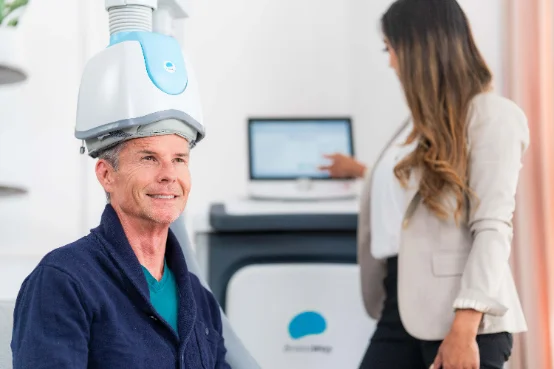
TMS & Neurofeedback
Transcranial Magnetic Stimulation, neurofeedback and biofeedback for depression and anxiety that has not responded to other treatment. Available at our Oakville clinic.
Learn More →