Serving Toronto & Across Ontario  ·  289-547-5911 · Toll Free 1-866-248-0567  ·  info@criticaltraumatherapy.com
Counselling & Psychotherapy

Counselling for Children, Teens & Adults

Trauma therapy, PTSD counselling, anxiety and depression treatment for children, teenagers and adults across Grimsby, Kitchener, Oakville and St. Catharines, with in-home appointments throughout the Greater Toronto Area and virtual sessions anywhere in Ontario.

Talking to someone should not feel like starting over each time. You are matched with a clinician suited to what you are actually dealing with, and you stay with them.

Injured in a motor vehicle accident? Start with a free intake call. We use it to understand what you need and to complete the funding request to your insurer. Your insurer has ten business days to respond, and treatment is booked once approval is in place. Case by case, we may begin sooner.

Ages 4+
Children, teens and adults
No Cost
Approved accident benefits care is billed to your insurer
30+
Therapeutic modalities available
What We Treat

How Counselling Helps

Different difficulties call for different approaches. Tap any area below to read how we work with it.

Trauma & PTSD

Following a collision, the mind can stay on alert long after the body has healed. You may relive the crash without warning, see it when you close your eyes, feel your heart race at the sound of traffic, or find yourself avoiding the road entirely.

This is not weakness and it is not permanent. Trauma therapy works by helping your nervous system recognize that the danger has passed. We use approaches with strong evidence behind them, including EMDR, cognitive processing therapy and prolonged exposure, always at a pace you set.

You will never be pushed to describe more than you are ready to describe.

Anxiety & Panic

Persistent worry, a racing heart, breathlessness, the sense that something bad is about to happen. After an accident, many people find anxiety attaches itself to driving, to being a passenger, or to leaving the house at all.

Treatment identifies what your anxiety is responding to and gradually reduces its hold, using cognitive behavioural therapy, exposure work and practical tools you can use in the moment. Where driving is the trigger, we can measure the response objectively and treat it directly.

Depression & Low Mood

Losing your work, your independence, your routine and your sense of who you are will affect anyone. Low mood after an injury is common, and it deserves treatment rather than patience.

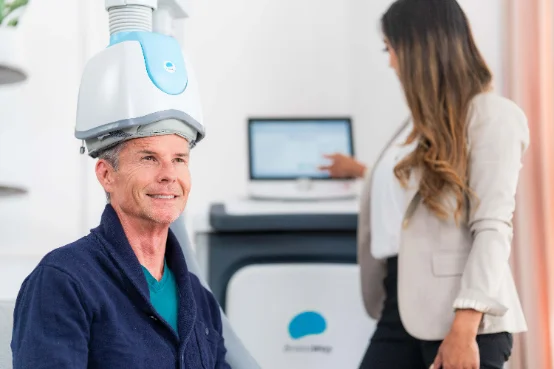
We work with cognitive behavioural therapy, behavioural activation and interpersonal approaches, and where mood has not responded to previous treatment we can arrange psychiatric assessment, TMS or neurofeedback. Depression that has resisted treatment before is not a dead end.

Children & Teenagers

Child and teen therapy and paediatric counselling from age four in Grimsby and St. Catharines, from age five in Oakville, and from age ten in Kitchener, with in-home, in-school, and virtual appointments also available. Children rarely describe distress in words. It appears as clinginess, nightmares, refusing the car, trouble at school, stomach aches, or anger that seems to come from nowhere.

Therapy is adapted to age, using play, art and structured activity for younger children and more direct conversation with teenagers. Parents are involved in a way that respects a teenager’s privacy, and we will always explain what we are doing and why.

Grief & Loss

Grief after a collision takes more than one form. There may be the death of someone in the vehicle, or the loss of the life you had, the work you did, and the person you were before.

We give that loss room rather than trying to move you past it, and we help you find a way to carry it that does not consume everything else.

Relationship & Family Strain

Injury changes households. Partners become caregivers, roles reverse, money becomes tight, and patience wears thin on all sides. Resentment and guilt often sit alongside love.

We offer individual, couples and family sessions, and support for the family members whose own difficulties tend to go unmentioned because someone else is more obviously unwell.

Therapy Groups

Sitting with people who understand without needing it explained is a particular kind of relief. Our groups bring together people working through similar difficulties, led by a clinician.

Groups run alongside individual therapy or on their own, and they are often the point at which people stop feeling alone in this. Ask us what is currently running.

Driving, Passenger & Pedestrian Anxiety

Fear of driving is one of the most disabling consequences of a collision and one of the least often treated. The same is true of fear of travelling as a passenger, and of anxiety about crossing roads or walking near traffic after being struck as a pedestrian or cyclist. We assess all of these using virtual reality cleared as a medical device, with a small electrode recording your heart rate, in our clinic or in your own home.

That tells us exactly which situations provoke the response, so treatment works through them in a graded way. Progress is re-measured, so you can see it rather than hope for it.

Who You Will See

Our Counselling Team

Different registrations bring different strengths, and we match you to the right one rather than the next available. Meet our team.

Registered Psychotherapists

The core of our counselling team. Trained in trauma-focused therapies and the day-to-day work of recovery, delivering EMDR, CBT and other evidence-based approaches.

Psychologists

Primarily conducting psychological and neuropsychological assessment for clients aged 18 and over, establishing diagnosis and guiding the treatment plan that follows.

Registered Social Workers

Counselling alongside practical help with the systems around you, including funding, benefits paperwork, housing and coordinating other services. Often the first person you will meet.

Nurse Practitioners

Our team includes nurse practitioners. They bridge mental and physical health, and can assess and prescribe where medication forms part of your care.

Our Approach

Therapeutic Modalities

More than thirty approaches are available across our team. What you receive is chosen for your situation, not because it is the only thing on offer.

Trauma-Focused

  • EMDR (Eye Movement Desensitization and Reprocessing)
  • Cognitive Processing Therapy
  • Prolonged Exposure Therapy
  • Trauma-Focused Cognitive Behavioural Therapy
  • Somatic and body-based approaches
  • Narrative therapy

Cognitive & Behavioural

  • Cognitive Behavioural Therapy (CBT)
  • Dialectical Behaviour Therapy (DBT) skills
  • Acceptance and Commitment Therapy (ACT)
  • Behavioural activation
  • Mindfulness-based cognitive therapy
  • Solution-focused brief therapy

Technology-Assisted

  • Neurofeedback and biofeedback
  • Virtual reality graded exposure
  • Transcranial Magnetic Stimulation (TMS)
  • Objective outcome measurement and progress tracking

Relational & Expressive

  • Emotion-focused therapy
  • Couples and family therapy
  • Play therapy for younger children
  • Art therapy
  • Group therapy
  • Interpersonal therapy

Somatic & Body-Based

Approaches that work with the body as well as the mind, including one-to-one restorative and trauma-informed yoga led by a Registered Social Worker, which family members are welcome to join. It is also offered in person at community locations in St. Catharines, so please contact us to hear about upcoming sessions. Useful where trauma shows up physically, as tension, guarding, or a nervous system that will not settle.

If you have tried therapy before and it did not help, that often means the approach was wrong for you rather than that therapy does not work. Tell us what you have already tried.

What to Expect

Your First Session

The first appointment is the one people worry about most. Here is exactly how it goes.

Before You Arrive

You won’t be starting from scratch. Our intake team will have spoken with you by phone, so your clinician already has a sense of what brings you in.

We’ll also send you an intake form to fill out before your visit, whenever it suits you. It helps us get to know you a little, so your first session can focus on what matters most to you.

If you’d like to bring a partner, parent or friend, you’re welcome to. Just let us know and we’ll make sure there’s room.

The First Appointment

Your first session is mostly about listening. Depending on what you chose when booking, it will be either a brief screening or a more thorough assessment. Either way, your clinician will ask what has been happening, what life was like before, and what you’d like to change.

You don’t have to share the details of what happened. If a question feels like too much, just say so and we’ll move on. You set the pace.

By the End

You’ll leave with a few practical strategies you can start using right away, so you have something to help in the days ahead.

Your clinician will share what they think will help most and roughly how long it might take, and you’ll book your next appointment, usually within a week or two. We’ve matched you with a clinician suited to what you’re going through, so you can feel confident you’re in good hands from the start.

Finding the Right Fit

The relationship with your clinician matters, and we take care to get it right from the start. If you ever feel someone else might suit you better, just let us know and we’ll arrange it, with no explanation needed.

Because we’re a team, you can stay with us and won’t have to start your search again.

Common Questions

Questions About Counselling

The things people ask us most before starting therapy.

How long will I need therapy?

It depends on what you are dealing with, and anyone who gives you a number before assessing you is guessing.

Focused trauma treatment is often a matter of months rather than years. Chronic pain, brain injury or long-standing difficulties usually take longer. We reassess at intervals using the same measures, so progress is tracked rather than assumed.

We will also tell you honestly when we think you no longer need us.

How often are appointments?

Usually weekly at the start, moving to every two or three weeks as things improve. Where someone is struggling considerably, or where intensive trauma work would help, we sometimes schedule more than one session a week. Treatments such as EMDR tend to work better with consistent, closer-spaced sessions early on.

Frequency is set with you around what you can manage practically and financially, not imposed.

What if I cry, or cannot speak?

Both are entirely normal and neither is a problem. Your clinician has seen it many times and will not be uncomfortable.

If you cannot find words, you do not have to fill the silence. Sitting quietly in a session is allowed and is sometimes the most useful thing that happens.

Will I have to relive the accident?

Not before you are ready, and never in more detail than you choose. Several of the treatments we use, EMDR among them, work without requiring you to narrate the event.

You can stop at any point. Being pushed to relive something before you are ready is not therapy.

Can I change clinician or approach?

Yes, at any time, and you do not need to explain yourself or worry about causing offence. The fit between you and your clinician matters more than almost anything else in therapy, so if it is not right, tell us and we will match you with someone else. Because we are a clinic rather than a sole practitioner, that is a straightforward change, and your history stays with us so you are not starting over.

The same applies to the approach itself. With more than thirty modalities across our team, if one is not working we can try another rather than persevering. If you have tried therapy before and it did not help, that often means the approach or the fit was wrong rather than that therapy will not work for you. Tell us what you tried.

Is it confidential?

Yes, subject to the legal limits that apply to every regulated health professional in Ontario: a risk of serious harm to you or someone else, and suspected harm to a child. We will always tell you if such a situation arises.

Where an insurer funds your care, they receive the treatment plans and progress reports needed to administer the claim, and they are entitled to request your clinical records. We will explain exactly what is likely to be shared before you begin, so there are no surprises. If there is something you would prefer not to have documented, tell your clinician and we will discuss how to handle it. Nothing is released to an insurer or anyone else without your written consent.

Do you prescribe medication?

Our nurse practitioners can assess and prescribe, and our psychiatrists provide physician-level opinions on diagnosis and medication.

Many people do well with therapy alone. Where medication would help, we can arrange it rather than sending you elsewhere.

What about TMS or neurofeedback?

Where mood or anxiety has not responded to therapy and medication, Transcranial Magnetic Stimulation, neurofeedback and biofeedback are available at our Oakville clinic.

Treatment-resistant depression is not a dead end, and these are reasonable next steps rather than last resorts.

Specialized services →

Can my family be involved?

Yes, if you want them to be. We offer couples and family sessions, and support for family members in their own right, since injury affects whole households.

With an adult client, nothing is shared with family without your consent.

Guide for family members →

Funding & Access

How Your Care Is Funded

If you were injured in a motor vehicle accident, your treatment is funded through your auto insurer’s accident benefits, regardless of who caused the collision. We complete the paperwork, submit the funding request, and bill your insurer directly. Approved care costs you nothing out of pocket.

Your insurer has ten business days to respond to a funding request. Waiting is difficult when you are struggling, so on a case-by-case basis we may begin treatment before funding is confirmed.

No accident claim? Most extended health plans provide coverage. Where they do not, we offer sliding-scale and self-pay rates, protected accounts through BridgePoint, and MediCard financing for private-pay sessions. We will work within your budget.

No Referral Needed

You are welcome to contact us directly. Referrals also reach us from lawyers, physicians and case managers.

Sessions Where You Are

Four clinics, in-home appointments across the Greater Toronto Area and Southern Ontario, in-school sessions for children where the school authorises our attendance, and virtual appointments anywhere in the province.

Appointment Times

Typically 9 to 5:30, Monday to Friday, with evenings and weekends by appointment. Request a call and our intake team will phone you to book a time that works for you.

If Driving Is Difficult

Tell us when you call. We can arrange transportation, and driving anxiety and fear of driving is itself something we assess and treat.

Beyond Trauma Care

Explore More Ways We Can Help

Two more parts of Critical Trauma Therapy worth a look.

CTT Wellness Division

Proactive mental wellness, stress management, and preventive care for people who want support before a crisis.

CTT Wellness →

TMS & Neurofeedback

Transcranial Magnetic Stimulation, neurofeedback and biofeedback for depression and anxiety that has not responded to other treatment. Available at our Oakville clinic.

Learn More →

Ready When You Are

Weekday appointments 9 to 5:30, evenings and weekends by appointment — in clinic, at home, or online.

Book an Intake Call Submit a Referral