Medico-Legal Assessment & Treatment
We are led by clinicians recognized by the Ontario courts as experts in motor vehicle accident legislation. Our work spans accident benefits, tort and long-term disability files. We assess and we treat, so we document impairment from the start and support your client throughout. Our assessments document impairment with objective, FDA-cleared measures and our reports are written for the people who have to act on them.

Assessment Services for Counsel
We prepare every assessment to stand up to scrutiny, using standardized instruments and clear reasoning and conclusions that hold up under an insurer’s examination and at the Tribunal.
Personal Injury Files We Report On
Our assessment and reporting is not limited to car accidents. We prepare medico-legal reports across personal injury generally, including motorcycle, snowmobile and ATV collisions, dog bites, slip and fall and occupiers’ liability, e-scooter and e-bike incidents, pedestrian and cyclist claims, workplace injury and long-term disability disputes. Our assessors remain available through the dispute process.
If your file does not appear here, ask. The clinical questions in a personal injury matter are broadly consistent, whatever caused the injury: what the impairment is, how it limits function, what treatment is reasonable, and what the prognosis is.
Assessments You Won’t Find Elsewhere
These assessments were developed by our founder, an Occupational Therapist with over twenty years in the motor vehicle accident sector on both the insurer and plaintiff sides, who has been deemed an Expert Witness in Occupational Therapy by the Ontario courts. Each was created to answer the questions that catastrophic determination and entitlement actually turn on, and to answer them through measurement rather than interview alone. All are copyright protected and proprietary to Critical Trauma Therapy, and are available through no other provider in Ontario.
Mental Health Driving Anxiety Assessment©
Driving anxiety is routinely dismissed as subjective. We measure it objectively, using FDA-cleared virtual reality technology and biofeedback to confirm that a clinically significant anxiety response is present, quantify its severity and identify the specific triggers underlying the avoidance, then use those same findings to direct treatment, so graded exposure targets the scenarios that actually provoke the response and progress is re-measured rather than estimated.
Built in anticipation of post-104-week IRB entitlement, attendant care (Form 1), GOS-E scoring and the AMA Guides Chapter 14 spheres of function, activities of daily living and social and community functioning.

The Quantitative Sleep Assessment©
Sleep disturbance, fatigue and non-restorative sleep are among the most common consequences of a collision and among the most readily dismissed as subjective. This assessment converts those complaints into reproducible evidence.
Across a minimum of three nights in the client’s own home, an FDA-cleared medical device records the physiological signature of each night: duration, latency and efficiency, restorative versus non-restorative sleep, fragmentation, and overnight autonomic arousal. Those recordings are read alongside validated measures, so what the client reports and what the device captures can be compared directly.
Its most valuable output is a graded severity rating of reduced daytime alertness, the mechanism by which a sleep injury becomes lost work, lost independence and a need for care. Severity runs from mild (most daily activities manageable), to moderate (some supervision or assistance required), to marked (daily activities significantly limited, caregiver supervision required), to extreme (unable to self-care).
Because the grading rests on device-based measurement rather than self-report, it gives counsel a defensible, severity-rated statement of daytime impairment that speaks directly to the functional tests for income replacement and non-earner benefits, to the mental and behavioural impairment criteria under the AMA Guides to the Evaluation of Permanent Impairment and to the reasonableness of the care being claimed. The same findings ground the treatment recommendations that follow, identifying which sleep mechanism is driving the impairment, so intervention targets the cause rather than the complaint.

Neuromuscular and Gait Assessment
FDA-cleared medical devices, validated inertial motion analysis and handheld dynamometry, measure range of motion and gait mechanics directly, producing quantifiable documentation of physical impairment after a collision. Measurement rather than observation.
It captures gait mechanics (walking speed, cadence, stride length, symmetry and pelvic kinematics); postural stability and fall risk through static and dynamic balance testing and Timed Up and Go; cervical, trunk and shoulder range of motion with angular velocity; and isometric strength with bilateral comparison, asymmetry indices, grip strength and rate of force development.
Every finding is compared against normative data, so impairment is expressed as a measured deviation from expected function rather than a clinical impression.
The result is reproducible, defensible evidence of functional limitation, establishing the treatment plan, identifying safety concerns, tracking progress and supporting insurer examination responses, catastrophic impairment determination and Licence Appeal Tribunal proceedings under the SABS. It also produces the objective measurement required under Criterion 2 of the catastrophic impairment definition, total loss of use of a limb, quantifying strength, range of motion and functional capability rather than relying on clinical observation alone.
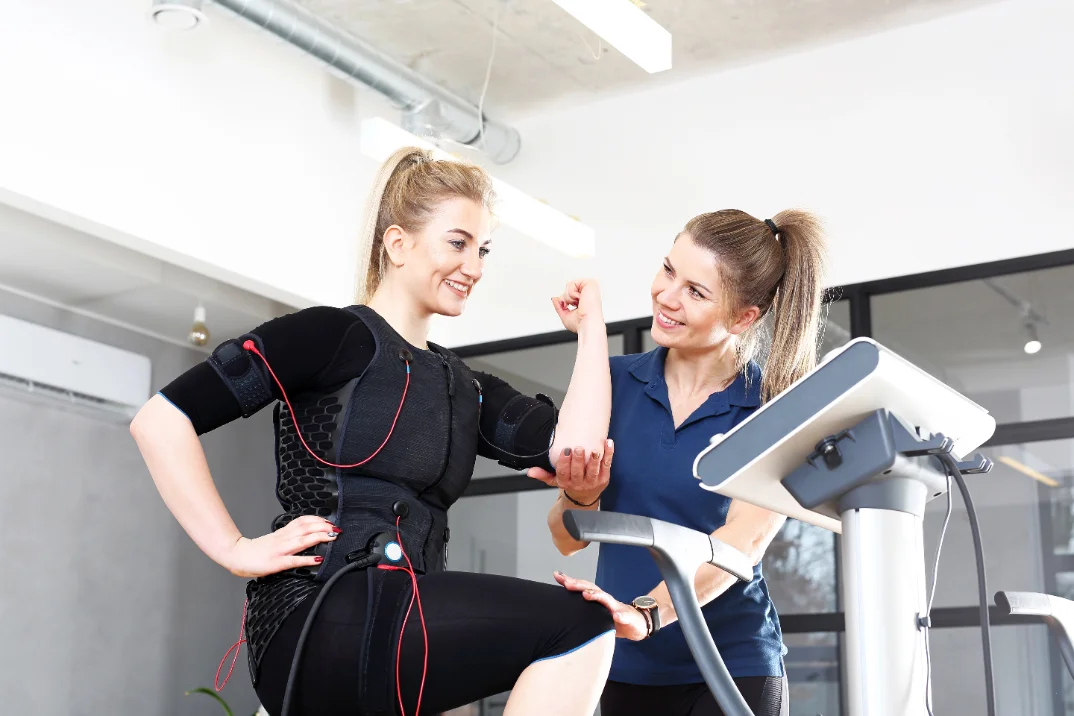
Functional Impact and Barriers to Recovery Assessment©
After a collision, physical injury is only part of the story. Financial strain, housing instability, fractured relationships, language and cultural barriers, isolation, gaps in the health system and the insurance process itself all shape whether someone recovers.
Conducted by a Registered Social Worker, this assessment documents functioning across four core areas, activities of daily living, social functioning, concentration and pace and adaptation to stress, alongside nine barrier domains that standard medical reporting leaves out.
Findings are corroborated with validated outcome measures and set out in a structured report, giving counsel and the treatment team a defensible record of true severity and the specific supports recovery requires. Because it documents what has persisted and the treatment and supports required to address it, it also grounds future care planning, the cost of care and the supports a client will require over time and speaks to the loss of amenities, diminished quality of life and impairment of important functions that a tort claim must establish.

We Review the File First — Free
Send us the file and we read all of it. We identify the diagnostics that are missing, the consultations the record still needs and the clinical team required to properly support the claim, then we coordinate all of it, so the file is ready to proceed.
This is why our numbers look the way they do. Of the clients we assess and recommend for catastrophic determination, 88% achieve designation, across more than 600 catastrophic assessments. We are candid when a file will not meet the threshold, which is worth as much to you as the cases that will.
Assessments are flat-fee, so your cost is known before you commit, and we offer protected accounts where appropriate.
Send a File for ReviewGetting Your Client There
Objectivity That Withstands Scrutiny
Self-report alone is the weakest part of most psychological and physical evidence. We assess using standardized, validated instruments throughout and FDA-cleared medical devices where the assessment calls for them, alongside standardized clinical instruments, so impairment is documented in data rather than description and validity is addressed before an insurer’s examiner raises it.
Because our team includes psychologists, psychiatrists, psychotherapists, social workers, nurse practitioners, physiotherapists and Registered Dietitians, we can assess every aspect of the claim under one roster, rather than leaving you to source and coordinate each discipline separately. Treatment can begin immediately where it is warranted.

Court-Experienced Experts
Led by clinicians recognized by the Ontario courts as experts in motor vehicle accident legislation.
Reports Written to Be Used
Findings are stated plainly, the reasoning behind each opinion is set out in full, and every conclusion answers the specific question your file needs answered. Test data supports the opinion rather than substituting for it.
Treatment Under the Same Roof
Trauma therapy, physiotherapy and nutrition support billed through accident benefits, so your client's recovery is documented as it happens.
Protected Accounts & Financing
Where benefits are exhausted, denied or in dispute, we hold protected accounts pending settlement and work with litigation funders such as BridgePoint. We work within your budget on the file, so funding is never the reason a client goes untreated.
Access Across Ontario
Four clinics, in-home psychological and social work assessment and treatment across the Greater Toronto Area, physiotherapy home visits from Hamilton through to Niagara, and virtual appointments where appropriate, so distance does not delay your file.
We Treat, and the Treatment Is the Record
Assessment is a snapshot. Treatment is the longitudinal record and because we begin treating early, every impairment is documented as it is lived, in real-world examples, from the start. Your client is supported the whole way through.
Social Work & Psychotherapy
Ongoing trauma therapy and a record of what the injury actually costs: the panic on a highway on-ramp, the shift that can no longer be worked, the withdrawal from family life. We also help your client navigate income supports, housing and the system itself, the practical pressures that otherwise derail recovery.
Physiotherapy
Pain management, conditioning, mobility and strength treated on an ongoing basis, with range of motion and function re-measured at intervals. The file therefore shows measured progress over time, the point at which gains level off, and the physical demands of home and work that the client still cannot meet.
Nutrition
Appetite loss, digestive injury, jaw and dental pain and medication effects tracked by a Registered Dietitian, with weight and nutritional risk monitored over time, impairment that is invisible in most files and quietly significant in many.
Where We Fit Under the SABS
Accident benefits turn on documentation: which category the claim falls into, what treatment is reasonable and necessary, and whether the evidence supports it. Our assessments and reporting are built around those tests.
Out of the Minor Injury Guideline
A claim held within the Minor Injury Guideline is limited to $3,500 in medical and rehabilitation benefits, nowhere near enough for a client with a genuine psychological injury. A documented psychological diagnosis is often what moves a file out of the MIG and our assessments are written to address that question directly.
Non-Catastrophic Files & the $65,000 Limit
Medical and rehabilitation benefits are combined at up to $65,000 over five years, and that can be exhausted in a year on a serious file. We plan treatment against the limit rather than through it, and flag early when a catastrophic assessment should be considered.
Catastrophic Determination
Catastrophic status opens up to $1,000,000.00 in medical, rehabilitation and attendant care benefits. We coordinate and complete the multidisciplinary assessment and deliver the OCF-19 with one integrated report behind it.
Treatment Plans & Approvals
We prepare OCF-18 treatment and assessment plans with the clinical reasoning attached, and track the insurer’s ten-business-day response window. Where treatment is denied, we prepare the written response challenging the decision and provide the clinical record behind it, so the dispute does not rest on your office alone.
Insurer Examinations & LAT Disputes
When an insurer examination reaches a different conclusion, we prepare rebuttal opinions and written responses to denials and our assessors remain available through the dispute process at the Licence Appeal Tribunal.
Income & Disability Support
Entitlement to income replacement before and after the 104-week mark, to non-earner benefits, and to housekeeping and caregiving benefits depends on how clearly a client’s functional limitations are documented. Our assessments address the test that applies in each case, and we complete the supporting documentation for Ontario Works, ODSP and CPP Disability.
Following the 1 July 2026 amendments under O. Reg. 383/24, these benefits are optional coverages on newer policies while medical, rehabilitation, and attendant care remain mandatory. We confirm which benefits are in play on each file before assessing, so the report addresses the entitlement that actually exists rather than the one that used to be standard.
When Income Replacement Is Not in the Policy
Where a client has declined income replacement coverage, our Registered Social Workers identify and pursue the alternatives: Employment Insurance sickness benefits, short and long-term disability through an employer or union, WSIB where the collision was work-related, Ontario Works, ODSP, and CPP Disability, along with municipal and community supports for housing, utilities, and food security. We complete the supporting clinical documentation each programme requires and follow the applications through.
We also explain to clients what coverage they hold and what it funds, which reduces the volume of coverage questions arriving at your office and means instructions come from a client who understands their own position. A client whose basic income is stabilised also continues attending treatment, which protects both the recovery and the evidentiary record on your file.
A Note on the July 2026 Changes
Under the amended Schedule, medical, rehabilitation and attendant care remain mandatory while most other benefits became optional and auto insurance is now first payor ahead of extended health plans. In practice that means more files where coverage is thinner than the client assumed and more reason to document impairment properly from the outset. We build treatment plans around the coverage that actually exists on the policy.
Tort, Disability & Liability Claims
The accident benefits file is rarely the only file. Our assessments are written so the same clinical evidence carries into the tort action, the disability claim, or a liability matter that never involved a car at all.
The Tort Threshold
Recovery for pain and suffering requires a serious and permanent impairment of an important physical, mental or psychological function. We assess and report against that language directly, permanence, importance to the client’s life and seriousness measured in what they can no longer do, Severity is documented through measurement rather than assertion.
Long-Term Disability
Long-term disability claims are decided on the wording of the policy rather than the Schedule. We assess your client against the definition that applies, whether own occupation or any occupation, and address the treatment history where an insurer has argued that recovery was not reasonably pursued. Where a denial rests on a functional capacity evaluation or a psychiatric opinion, we provide a considered response to it.
Other Liability Claims
Slip and fall, workplace and public-premises injury, dog bites, assault and sexual assault, and negligence-related psychological harm. The trauma is the same clinical question; only the framework changes. Assessments are conducted with the sensitivity these files require.
Reports Written to Be Challenged
Every report is written on the assumption that another expert will read it looking for weaknesses: standardized instruments named and scored, validity and symptom-effort indices reported, causation reasoned rather than assumed, and limitations stated openly. Reports undergo internal clinical review before release.
Objective Measurement They Cannot Match
Most reporting on a file rests on interview and self-report alone. Our social work and psychotherapy assessments are corroborated with FDA-cleared, device-based measurement of sleep and of driving response, and our physiotherapy assessments with device-based measurement of neuromuscular and gait function. That data is reproducible and does not depend on the assessor’s impression or the client’s account.
Assessment and Treatment Together
Independent examination firms assess and hand the file back. Because we also treat, psychotherapy, physiotherapy and nutrition, impairment is documented contemporaneously across months of care, not captured once in a single appointment. Where an independent opinion is needed, assessment is conducted separately from the treating team.
How We Support the File
An assessment is one document. Most files need someone managing the clinical side from intake through resolution, that is the work we do alongside you.
Records That Support the Claim
Treatment records become evidence. Thin, inconsistent charting undermines an otherwise strong file, so we rebuilt our clinical notes and records process around what the claim will eventually need.
Standardized Every Session
All clinicians chart to a single documentation standard. A file therefore reads consistently from intake through to discharge, whichever member of the team provided the session.
Outcomes Tracked, Not Described
Standardized measures are repeated at set intervals, so progress, or the absence of it, is shown as data across the course of treatment.
Function as Well as Symptoms
Notes record what your client can and cannot do, work, driving, parenting, daily activities, because that is what entitlement and damages turn on.
Produced Promptly & Securely
Complete records are released promptly on request, transferred securely, and provided in chronological order with a summary index, so the file arrives ready to review.
From Referral to Report
Four steps, with a named contact on your file throughout.
Send the Referral
Submit our online referral form, or email or fax the referral with the documents you have. We confirm receipt and tell you what else we need.
Scope & Schedule
We confirm which assessments the file calls for and who will conduct them, then submit the funding request and book your client as soon as approval is in place.
Assessment
Conducted at the clinic, in your client's home, or virtually where clinically appropriate, using objective measures throughout.
Report & Follow-Up
You receive the report with findings and opinion. We remain available for clarification and support through the dispute process.
Recovery, Documented
Where treatment is warranted, we prepare the OCF-18 and bill the accident benefits insurer directly, so your client is not out of pocket and their progress is recorded in standardized outcome measures rather than anecdote.
Trauma therapy, physiotherapy and nutrition run as one coordinated plan, which means a single clinical narrative on your file instead of four disconnected chart sets.
When accident benefits are exhausted, denied or under dispute, treatment does not have to stop. We hold protected accounts pending settlement, accept litigation financing through funders such as BridgePoint, and structure treatment plans to work within the budget you have on the file.
Insurance & Funding →